
7 Lessons from St. Francis of Assisi for Deep Spiritual Growth
Discover seven timeless lessons from St. Francis of Assisi to deepen Catholic spirituality and grow in holiness and joy.
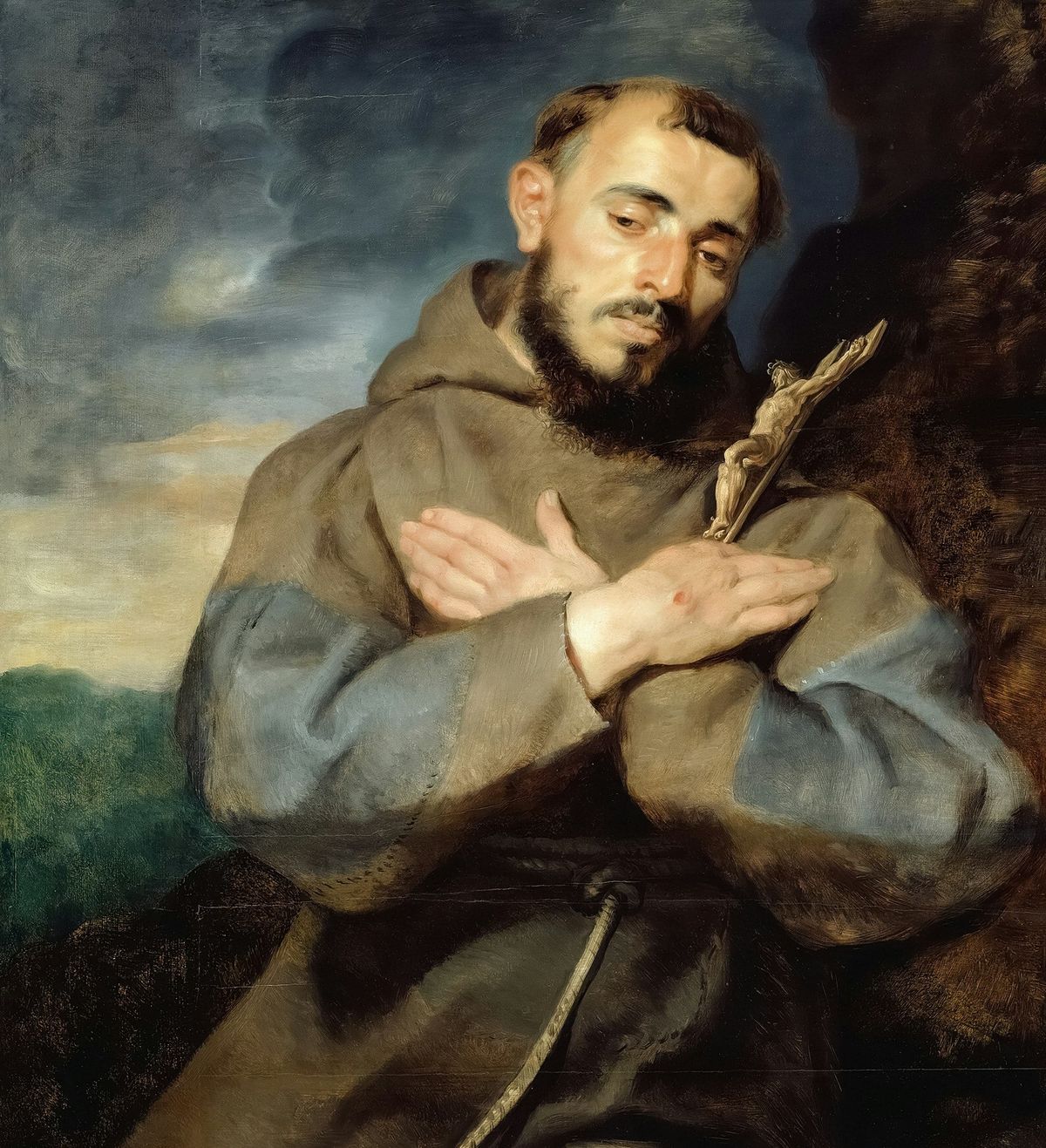
Why St. Francis Still Speaks to Us Today
St. Francis of Assisi is one of the most beloved and popular saints. I teach the Sacrament of Confirmation class, and every year at least one candidate chooses St. Francis as his saint, primarily because of St. Francis's love for animals and nature. However, we have manufactured a superficial image of this saint, focusing almost exclusively on his love for creation. It’s nice that his image adorns many bird baths, but we miss his depth and the lessons he offers for our spiritual growth. Francis not only admired Jesus but also sought to be a living reflection of him. We are called to do the same; we are called to holiness.
We live in a time when the desire for wealth and status dominate our society; Francis’s life invites us back to simplicity, humility, and joy. His story reminds us that spiritual growth isn’t found in comfort but in challenges that demand surrender to our God. In this article, I’m going to focus on seven lessons that can help us walk that same narrow path toward close union with God. Last week we covered St Francis on our church's weekly Bible Study and I was inspired to continue reflecting on this wonderful saint.
A Brief Look at His Life
Born Giovanni di Bernardone around 1181 in Assisi, Italy, Francis was the privileged son of a wealthy merchant. His early life was marked by ambition and extravagance. Donald Spoto, in Reluctant Saint, describes him as “a charming, restless youth who dreamed of knighthood.” But after a year of imprisonment and illness following battle, Francis began to hear the quiet call of God.
In the small church of San Damiano, he heard Christ speak from the crucifix:
“Francis, rebuild my Church, which you see is falling into ruin.”
He took those words literally, restoring the crumbling chapel stone by stone — and later spiritually, renewing the faith of countless souls.
As his faith and sense of vocation grew, he began to feel the need to detach from worldly things that were tying him down. This culminated when he renounced his father’s wealth before the bishop and many in the town and even stripped naked, removing all his expensive garments. He lived as a poor man, begged for food, and served lepers. Because of his joy and passionate love for Jesus, many started to follow him. In 1209 he founded the Order of Friars Minor (Franciscans), followed by the Poor Clares and the Third Order for laypeople.
In 1224, praying on Mount La Verna, he received the stigmata, the wounds of Christ — a sign of mystical union. Two years later, he died singing Psalm 142: “Bring my soul out of prison, that I may praise your name.” (Reluctant Saint, p. 248). His life was short, but he left an amzing legacy.
Lesson 1 – Humility: Embracing Poverty of Spirit
At the heart of Francis’s spirituality was humility — not humiliation, but joyful dependence on God. He called himself “God’s fool.” He saw pride as the great divider between the soul and grace. His dramatic renunciation before the bishop remains one of history’s purest symbols of detachment. Naked in the square, he laid down not only garments but ego.
“Blessed are the poor in spirit, for theirs is the kingdom of heaven.” — (Matt 5:3)
The Catechism (2546) reminds us that the humble “recognize their dependence on God.” Francis embodied that truth. He owned nothing, trusted divine providence, and found joy in littleness. Spoto notes that “he wanted no walls between himself and God, not even the comfort of possessions.”
For us, humility begins with honesty — acknowledging that all we have is a gift. True Catholic spirituality starts when we stop trying to manage grace and start receiving it. I remember hearing at a church class on the deadly sins that Pride is the worst of the deadly sins and the gateway to a life removed from God. They also taught us that humility stands as its antidote.
Reflection: Where is God inviting you to simplify something in life, to surrender to His providence so He can lift you?
Lesson 2 – Seeing God in All Creation
Francis’s love for creation flowed from love for the Creator. He called the sun his brother, the moon his sister, and even death “Sister Death.” In his Canticle of the Creatures, he sang:
“Praised be You, my Lord, through all Your creatures.”
For Francis, creation was an icon — a window into divine beauty. His preaching to birds and kindness to animals weren’t romantic gestures but acts of reverence. As Vatican II teaches in Gaudium et Spes 36, “All things are sustained in being by God’s creative Word.” Francis lived that truth.
Pope Francis’s Laudato Si’ echoes this same vision, calling us to an “ecological conversion” — a renewed sense that caring for creation is an act of worship. When we pause to thank God for a sunrise, the song of a bird, or the scent of rain, we join St Francis’s hymn of praise.
My wife and I had the blessing of traveling to Assisi, Italy, many years ago. The town sits on a hill, overlooking the most beautiful valley. It was easy to understand why Francis fell in love with nature as a reflection of God’s love.
Reflection: Try beginning your morning prayer outdoors this week. Let creation preach to your heart. If you walk in the mornings for exercise, try not listening to music some days and allow the songs of birds to lift your spirit in thanksgiving.
Lesson 3 – Love for the Poor and the Sick
The turning point of Francis’s life came when he embraced a leper. In Reluctant Saint, Spoto recounts: “He dismounted, kissed the man’s hand, and felt an indescribable sweetness in his soul.” What had once disgusted him became the door to grace.
The Gospel became flesh for Francis in the poor. He saw in them the suffering face of Christ:
“Whatever you did for one of the least of these brothers of mine, you did for me.” — (Matt 25:40)
The Catechism (2448) states, “The Church’s love for the poor is a part of her constant tradition.” Love for the poor, the sick, and the least among us was one of Jesus’ most frequent lessons by word and example. Francis’s life embodied that tradition — he begged for the hungry, tended to lepers, and called poverty his bride.
In our age of convenience, we often serve the poor at a distance. Francis challenges us to draw near. Perhaps that means visiting a nursing home, sharing a meal, or listening to someone who feels invisible.
Reflection: Whom do you find difficult to love? That’s often where God waits to meet you.
Lesson 4 – Joy in Simplicity
Francis was a man of holy joy. He danced through fields, sang when hungry, and joked with his brothers. He once told them, “The devil is most pleased when he can rob a servant of God of the joy of the Spirit.” For Francis, joy was armor.
This reminds me of Pope Francis and one of my favorite saints, St. Teresa of Avila, who were also joyful and promoted the expression of joy. Spoto describes how Francis and Brother Leo would walk through freezing rain, rejoicing when no one welcomed them. “That,” Francis said, “is perfect joy — when nothing outside of God satisfies.” He knew that contentment comes not from having much but from needing little.
In a consumer culture, simplicity feels like a loss. But as Francis shows, it’s the path to freedom. When we declutter hearts and homes, we make space for grace. God is trying to reach us every second of the day, but we have too much going on around us and in our minds.
Practical Step: Each month, give away some possessions and thank God for what remains.
Lesson 5 – Willingness to Suffer for Christ
In 1224, on Mount La Verna, Francis received the stigmata, the wounds of the Crucified — the first recorded in Church history. Spoto writes, “His agony was not spectacle but intimacy.” He longed to share in Christ’s suffering, not out of piety but pure love.
“Rejoice that you share in the sufferings of Christ, so that you may also rejoice with great joy when His glory is revealed.” — (1 Pet 4:13)
Francis viewed suffering as a doorway into divine compassion. When illness struck or rejection came, he would pray, “So much the more will I love You, Lord.” He saw in every pain an invitation to trust deeper. We too can enjoin our suffering to Christ’s. We may never bear the stigmata, but each of us carries hidden wounds. When we unite them with Christ’s Cross, suffering becomes redemptive — for us and for others.
Reflection: In your prayer, name a present struggle and consciously place it in Jesus’s hands. You can offer your sufferings for the conversion of sinners.
Lesson 6 – Brotherhood and Peace
Francis’s favorite greeting was simple: “The Lord give you peace.” It wasn’t a slogan; it was a mission. He brought peace to quarrelsome friars and even to enemies. During the Crusades, he crossed battle lines to meet Sultan al-Kamil of Egypt, not with sword but with humility. The two spoke for days. Though Francis didn’t convert the sultan, he left with friendship — proof that peace disarms hostility.
“Blessed are the peacemakers, for they shall be called children of God.” — (Matt 5:9)
Francis lived that beatitude. He believed true peace begins within — reconciling with God, then others. In his Admonitions 27 he wrote, “Blessed is the peacemaker who bears all for love of Christ.” To follow him today means forgiving quickly, listening deeply, and speaking kindly in a divided world. In the U.S., we live in a very polarized society, and the call to peace is more urgent than ever.
Reflection: Ask God today, “Where can I bring peace — in my family, parish, community, or heart?” Then take action.
Lesson 7 – Living in Constant Prayer and Communion with God
Francis’s active ministry emerged from a contemplative heart. He spent nights in caves, praying, fasting, and weeping for souls. When his brothers asked how to pray, he said simply: “Speak to God as to a friend.” Prayer for Francis was not duty but happiness — a continual conversation with the God he loved. He often withdrew to “places of solitude,” Spoto notes, where “the silence itself became a hymn.”
“Pray without ceasing.” — (1 Thess 5:17)
Francis lived that command literally. Whether walking, working, or resting, his heart remained turned toward heaven. The Catechism (2565) says, “In the new covenant, prayer is the living relationship of the children of God with their Father.” That was Francis’s secret: he stayed in relationship. His joy, peace, and courage all flowed from prayer.
For us, that means integrating prayer through ordinary life — a whispered “thank you” while driving, a Hail Mary between meetings, or silent adoration before the Blessed Sacrament.
Reflection: Consider setting aside one quiet hour this week to be with God — no agenda, no devotionals, no books, just presence.
Conclusion – Walking the Franciscan Path Today Is Walking Humbly with God
The seven lessons of St. Francis of Assisi are not relics of medieval holiness: they’re a living roadmap for anyone seeking spiritual growth in the modern world:
- Be humble and free of pride.
- See God in creation.
- Love the poor and the sick.
- Live joyfully in simplicity.
- Embrace suffering as a path to grace.
- Be a peacemaker.
- Pray always.
Francis once prayed, “I have done what was mine to do; may Christ teach you what is yours.” Each of us has our own mission of love — a way to rebuild the Church, one act of mercy at a time.
Lord, make me an instrument of your peace.
Where there is hatred, let me sow love;
where there is injury, pardon;
where there is doubt, faith;
where there is despair, hope;
where there is darkness, light;
where there is sadness, joy.
May we, like Francis, live so fully in God’s love that even our smallest deeds echo heaven.


